Showing posts with label Treatment. Show all posts

Skull Fracture Types and Treatment

Bone structure that forms the head of the human skeleton called the skull. The existence of the skull are critical to protect the brain and support the structure of the face.

skull injury

In order to functioning as a protection from potential brain injury, skull-shaped cavity formed protective shell that surrounds and a safe place for the brain and brain stem. Set of bones that make up the protective brain is called the neurocranium. Besides neurocranium, skull also consists of a set of bone-forming viscerocranium or face.

All parts of the skull was then put together by an appropriate seam-like sinartrosis joints system (static joints) formed by hardening of the bones. The existence of Sharpey fiber then allows the skull has a little flexibility.

Accidents May Cause Skull Fracture

Although the skull was designed extremely good and strong, but still could potentially for injury. Injury or trauma to the skull usually can cause cracks. Due to the structure of the skull bones sturdy and solid, it will clash of the strong ones that could lead to cracking.

Typically, the skull was damaged when a motor vehicle accident or fall off from height. Another thing that also can be the cause of damage to the skull bone is a direct blow to the head.

Type of Skull Fracture

Cracks or fractures of the skull can be divided into several types. This grouping is done by looking at the power that makes the damage, the location of the injuries, and the shapes of objects that caused the damage in the head. Below is some kind of damage to the skull.

  • Closed Fracture
Damage to the skull is named so if the skin cover the cracked area did not experience a tear or causing injury becomes open.

  • Open Fracture
Unlike the closed fracture, the condition of the skull bone injury is followed by damage to the skin at the site of cracks. Called as an open fractures due to bone damage visible or appearing from skin tears.

  • Skull Base Fracture
Fractures of this type occurred in the area of the base of the skull. This area covers the area around the eyes, ears, nose, or the back of the skull which is adjacent to the spine.

  • Depression Fracture
Other damage that can happen is a depressed fracture of the skull. So named to describe the fracture fragments pushed into the cavity of the brain.

Treatment of the Skull Fracture

In handling fractures of the skull, the determination of the type of damage above becomes very crucial. In addition to the type of damage that occurs, the handling will also be determined by how severe the fracture suffered. It takes months in order to be well recovered. It also depends on the age of the patient. The younger a person who experienced it, the sooner the possibility of well recovered.

In cases when a patient who suffered skull fracture also get open wounds on the skin, then the injury usually need to be cleaned first. Cleaning an open wound need to be done to prevent infection. In addition, doctor may prescribe medicine to relieve symptoms that may arise such as pain and nausea. Surgery may also be required if a skull fracture caused part of the bone migratory or broken.

Rib Injury Home Remedy Treatment

Falling and got hit in the chest area may cause the ribs bruised, cracked, or broken. Sometimes severe coughing can also lead to a rib injury in people who suffer from osteoporosis and cancer.

When ribs bruised, cracked, or broken, you will experience tremendous pain. But with a proper care, this pain will slowly goes away after three weeks to one and a half months because the rib structure is able to recover naturally.

Rib Injury

In most cases, a broken rib can be handled with care at home. These ways can you do to take care of the injured ribs.

Rib Injury Home Remedy Treatment

  • Taking painkillers. You can choose ibuprofen or paracetamol. Consider the use of the drug according to instructions on the package. Aspirin can also be used for adults.
  • Breathing exercises. When a rib get injury, you will feel pain when breathing deeply so that makes you tend to inhale slowly and shallow. Actually, you are advised to keep breathing normally. The purpose is to prevent chest infections and helps remove mucus from the lungs. As a form of breathing exercises, you can inhale a deep breath then exhale slowly. Do this 10 times every hour. Then you also can do exercises to perform mild cough every two hours.
  • Do not bandage the injured ribs. Bruised, cracked, or broken rib should not be covered with bandages (elastic bandage) wrapped around the chest area. Pressure from the bandage on the upper body area can hamper breathing and increases the risk of pneumonia.
  • Rest a Lot. If your job requires a lot of physical movement, we recommend you take time off. Similarly, if the condition of your ribs is considered as a severe injury and agonizingly painful.
  • Do not lying down for too long. Avoid lying position for too long, or being in the same position for a long time. In the first few days, you are advised to sleep in an upright position.
  • Being active. You are advised to keep moving once in a while, such as walking around and moving the shoulder. Remain mobile  will help clear your lungs of mucus.
  • Compress the chest. To reduce swelling and pain, compress your chest regularly. Use ice cubes or frozen food wrapped in a towel and apply on the chest area. Do this especially on the first few days.
  • Use a pillow if you want to cough. If you want to cough, hug a pillow to hold the chest to absorb the pressure.
  • Avoid the following things for a while. You are advised not to carry or lift heavy loads. Avoid straining too strong and avoid smoking. Just wait until your condition get better.

You have to really pay attention how to take care of your bruised, cracked, or broken ribs, as described above. Do not let your lack of attention worsen the situation and make the recovery process becomes longer.

Immediately see a doctor if you experience high fever, shortness of breath, severe chest pain, coughing up blood, cough accompany with yellow or green mucus, and pain in the abdomen or shoulder. You should also see a doctor if the pain does not relieve in a few weeks after taking care as mentioned above.

Hamstring Muscle Injury First Aid Treatment

On each thigh there are three muscle groups located at the rear and was named hamstring muscle. If this muscle sprain then it will lead to a hamstring injury.

Certain sports at risk of causing a person to get this injury. Football, basketball, tennis, rugby or other sports that require running and braking continuously. A dancer or runners are also at risk of suffering a hamstring injury due to compression of the exercise on the part of the thigh.

hamstring muscle injury

How Can Hamstring Muscle Get Injured?

In everyday activities, such as standing and walking, hamstring muscles are not used too much. But when we bend the knee, running, jumping, and climbing, the muscles become very active. Hamstring injuries can occur immediately due to the sudden movement or too explosive. The actions that related to these high risk conditions, for example due to a run, crashing, or jump.

Muscle damage can also occur gradually or during slow movements. The slow movement of a hamstring injury risk is exaggerated stretching movements.

If a person has been experience this injury, it is likely it will recurrent someday. This especially can happen to those who work as athletes or sportsmen.

Hamstring injury itself is divided into three categories if based on the severity level:
  1. Category I: happens when the hamstring muscle to stretch or mild stretch. This injury requires a few days of recovery.
  2. Category II: happen to a person who suffered partially torn hamstring muscle. Injuries of this category require recovery of several weeks to several months.
  3. Category III: the hamstring injury which occurs when tearing in the entire muscle. Injuries of this category requires restoration for a few weeks to a few months.

Hamstring Muscle Injury First Aid Treatment

To relieve the pain that appears, some of the actions below may help relieve it.
  1. Compress legs with ice to reduce pain and swelling. Do it every 2-3 hours for 20-30 minutes for a few days after the injury.
  2. Give pressure by putting on an elastic bandage on the injured area.
  3. When sitting or lying down, put your legs on a pillow so that its position is higher than the body.
  4. If necessary, take painkillers may be beneficial. However, you should consult your doctor to avoid the potential risk of side effects.
  5. As part of the healing process, doing stretching exercises and muscle strengthening. Do this according to the recommendation of your doctor.
  6. Rarely, surgery may be required in some cases to recover the damage of the hamstring muscle.

To avoid hamstring injury, stretching and muscle strengthening is the part that must be implemented. In addition, warm up before exercise can reduce the risk of this injury.

Sprained Ankle First Aid Treatment

The ankle sprain occurs when the ligaments (hard connective tissue that connects bones) leg get injury. Changing foot position or rotate suddenly can make ligaments stretch too far or even torn. Similarly, if foothold with the wrong angle, or using too much power, the ligaments can be snapped. In fact, ligaments serve to help stabilize the joint and prevent excessive motion.

Read Also: Sprain First Aid and Home Remedy Treatment


Ankle sprains are divided into three levels: mild, moderate, and severe. Fortunately, mild ankle sprain and moderate able to heal itself. To accelerate the healing, you can do the following things:

  • Protect ankle sprain in order injury not getting worsen, for example bandage the leg.
  • Rest the ankle joint for 2-3 days, but that does not mean you are unable to activity at all. Although your foot is sprain, you can still exercise, for example by training the arms and the feet that are not is sprain using a stationary bike. We recommend not running or jumping until you can walk without feeling pain. In addition, do not force the ankle to keep moving and do not walk too far or for long. Better stand up and walk around the house a short distance, while using crutches.
  • Compress the sprained ankle with ice water. The goal is to limit the swelling from spreading as well as relieve the pain. In addition, the ice also helps reduce pain. Cold compress the injured area as soon as possible for 15 to 20 minutes, 4-8 times a day. Do it for the first 48 hours or until the swelling deflated. If you use ice cubes, do not apply directly to the skin. In addition, do not put ice on the skin for too long because it can trigger tissue damage.
  • Bandaged sprained ankle with an elastic bandage or neoprene (synthetic rubber) for at least 48 hours (can be less or more). Useful to limit swelling and help the joints to rest. Do not bandage the ankle too tight because it can restrict blood flow to the legs. If the toes change color, tingling, or felt numb, immediately open the bandage.
  • Lift sprained ankle to over the heart for 2-3 hours a day if possible. The goal is to limit and reduce swelling and bruising. The trick, lie down on a couch or bed and put your foot on a pile of pillows. If not possible, the foot can be lifted at hip level when sitting in a chair. Keep in mind not to use bandages when the foot is raised because bandages can restrict blood flow to the legs.
  • Taking painkillers and anti-inflammatory like ibuprofen, naproxen, acetaminophen, or aspirin after a meal. But do not consume this drug often, unless prescribed by a doctor.
  • Perform stretching exercise if your doctor recommend it.

Knee Ligament Injuries First Aid Treatment

Knee ligament injury can happen especially when you are exercising or doing activity. Most of the knee injury caused the knee function becomes deteriorate, such as weakened to support the body weight.

knee ligament injury

The knee is a body part that works hard when you're doing activities, especially exercise such as running. The load on the knee while working hard can cause injury to the ligaments. Ligaments are hard bands that connects bone to bone.
The ligaments in the knee ligaments are vulnerable to injury and can lead to permanent changes in a person's activity. Injuries that often experienced by athletes can also be experienced by anyone who are doing or have conditions such as the following:
  1. Knee suffered from a concussion
  2. Rotating the knees with your feet remain grounded on the ground.
  3. Suddenly moving the load weight from one foot to the other.
  4. Over widen the knees.
  5. Jumping and landing with bent knees.
  6. Sudden stop while running.
Knee ligament injury will cause the person experiencing it can feel sudden pain, swelling, crackling sound of a knee injury, the joints feel loose, and always feel pain each time lifting weights.

Read also : Knee Injury Treatment Home Remedy

Examination for detecting injuries could be done with MRI, X-rays, or other tests. In most cases, the doctor may use a needle to suck and dried blood in the swollen knee.

If it not treated immediately, the impact of a knee ligament injury can be felt up to several months, even several years later.

Knee Ligament Injury First Aid

  1. Compress the knee with a cloth to relieve swelling. You can also use ice cubes. Place the compress for 20-30 minutes every four hours.
  2. Rest your knees.
  3. When lying down, raise your knee on a pillow.
  4. If needed, take anti-inflammation drug and pain reliever.
  5. Wear kneepads to prevent further injury.
  6. The doctor will probably encourage you to practice stretching and movement to train the strength.
  7. Physical therapy may be needed on medical advice.

After receiving treatment, avoid rush back on the move as actively as before until your knee recover as the following conditions:
  1. No swelling anymore.
  2. The injured knee is just as strong as uninjured.
  3. Do not feel pain in the knee when walking, running and jumping.
  4. Be able to bend and straighten the knee without pain.
  5. Do not underestimate the recovery period because if you are rush to move as it was when the knee has not completely recovered, then you face the risk of permanent injury.

Fast or slow period of recovery depend on the severity of the injury and the treatment given. However, some types of injuries, such as Anterior Cruciate Ligament (ACL) and Posterior Cruciate Ligament (PCL) torn typically require reconstructive surgery to recover. These ligaments connect the femur to the tibia (a lower leg bone).

The possibility of ACL injury is very common among all forms of sports injuries. Injuries to these Cruciate Ligaments unfortunately can not be fixed and can only be reconstructed. This operation is likely to return more than 80 percent of knee function. In other words, it will not completely the same as before the injury. Patients also will likely continue to experience pain and swelling. Besides this operation also risk causing other health problems, such as infection and blood clots.

Therefore it is important to prevent knee ligament injuries before it happens. This can be prevented by warming up before exercise or doing activities, stretching and strength training regularly to maintain muscle flexibility, and avoid increasing the intensity of exercise suddenly.

Knee Cartilage Injury First Aid Treatment

The cartilage is a powerful and flexible tissue that is exist throughout the body. However, it does not make it tamper-proof.

injured cartilage

The cartilage has diverse functions such as connect one bone to another, supporting other tissue, reducing the friction between the bones, preventing joint damage, sustain body weight, and help us move freely.

Read also : Osteoarthritis Risk Factor and How to Resolve It

Parts of the body can be bent consists of three parts, which are elastic cartilage, fibrous, and hyaline or articular.
  1. Articular cartilage or hyaline cartilage. Strong, supple, located between the ribs, around the windpipe (trachea) and in between the joints.
  2. Elastic cartilage. Forming the ears, the nose tip, and the epiglottis (tissue behind the throat that prevents food down into the airways).
  3. Fibrous cartilage. There is between the spinal discs of the vertebrae and between the hip and pelvis.

The three types of the cartilage can be damaged or injured. And when that happens, cartilage takes longer to heal and recover. This is because cartilage does not have its own blood supply which can repair damaged tissue.
Articular cartilage is a type of the cartilage that is the most common and potentially seriously affected by the damage. Areas of the cartilage that are usually damaged or wounded is in the knee. It is often due to injury, trauma or impact toned and hard, too much pressure, or even because it rarely moves (prolonged bed rest).

If it were so, the cartilage that has been injured can cause swelling, extreme pain, and restricted movement.

Knee Cartilage Injury First Aid

  1. Protect the cartilage from further injury.
  2. Rest for at least 24-48 hours.
  3. Compress knee injury with ice cubes that had been wrapped with a cloth or towel for 20 minutes every hour. Do this during the first 48 hours after the injury occurred.
  4. Press or wrap the knee with a bandage.
  5. Raise the legs into position that higher than the heart.

After that, immediately visit the emergency department and a specialist for further treatment such as:
  1. Physiotherapy, which is exercises to support the joints, strengthen the muscles around it, and helps reduce pain and stress on the joint.
  2. Prescribe a painkiller to help reduce swelling and pain.
  3. Give advice to change your lifestyle to reduce the activities that require the use of  the injured joint or cartilage.

Read also : Knee Injury Treatment Home Remedy

However, if the the cartilage is damaged badly enough, the only way to be achieved is through the operation (such as knee cartilage replacement). If your knee injury, immediately consult a specialist expert to ensure no damaged of cartilage. The faster the injured receive medical interventions, the sooner the recovery process.

Plantar Fasciitis Treatment Exercises

Plantar fasciitis is a common cause of heel pain. Fortunately, plantar fasciitis can be prevented by doing some exercise for a few minutes to make it more flexible.

plantar fasciitis

Plantar fasciitis is an inflammation of the thick fibrous tissue that runs vertically from heel to toe. This tissue is called plantar fascia and is useful to support muscles and arches as well as connecting the heel bone to the toes. If it gets over stretched or overuse, the plantar fascia surface can be torn, causing inflammation, pain, and walking problem.

Plantar fasciitis can be caused by several factors such as wearing high heels, flat soles that do not have an arch, a strained calf muscle, pregnant, obese, or standing for a long time. Heel pain in the morning or after a long break is usually this disease characteristic.

Read also : This is What Happen When You Wear High Heels!


Plantar Fasciitis Treatment Exercises


The pain of plantar fasciitis can be relieved by doing exercise purposively designed to stretch the calf muscles and plantar fascia as below:

  • Using a Towel

Before getting out of bed in the morning, wrap a towel around the foot. Use towel to pull the toes toward the body, try to keep your knees straight. Repeat three times on each leg. Or, place a towel on the floor and then grab a towel with your toes and pull it toward you. Do not forget to repeat this movement on the other leg.


  • Using a Chair

Sit on a chair. Bend your pain foot knee so you can hold your toes. Pull the toes inward (toward you) until you can feel a stretch on the plantar fascia. Hold it for 20 seconds and repeat 10 times, do this exercise 3-5 times a day.


  • Using Wall

Place both hands on the shoulders parallel to the wall with one foot in front of the other. Your front leg should be lined around 30 cm from the wall. Lean against the wall with the front knee bent and straighten the rear legs, until you feel your calf muscle becomes tight. Repeat 10 times before switching to the other foot.

There are also other movements, but you have to stand closer to the wall. straighten your arms and stick to the wall aligned the shoulders. Place one foot in front of the other foot, bend your knees at the same time, with a footstool weight on both legs. Keep your back straight and look straight forward, and both heels touching the ground. Hold for 10 seconds and repeat 10 times before switching to the other foot.


  • Using a Can

Relieve heel pain can also be done with the help of beverage cans, bottles, plastic ice, or a rolling pin. You can do this exercise sitting or standing. The trick is, put your feet on the can then roll it backwards and forwards. Repeat at least twice a day.

  • Using Stairs

Standing at the bottom of the stairs while holding the handle of the stairs and facing a higher stair. Keep your legs slightly apart, with heels hanging off and the pads of the feet on stair. Lower your heel to the calf felt tight. Hold this position for about 40 seconds, before raising your heels back to the starting position. Repeat this exercise six times, and do at least twice a day.

We recommend you to do the exercise on both legs, although only one leg ache. Why? Because besides relieving pain in the heel, foot balance and stability will increase. But before doing exercise above, ask your doctor first. Do not forget to rest your feet by pausing or reducing activities that can lead to plantar fasciitis. If you feel your heel in pain, compress with ice, compress with ice to relieve the pain.

Tailbone Pain Treatment Home Remedy

The cause of tailbone pain is very much, one of them is caused by serious injuries, such as fallen or broken coccyx. But in general, sitting on a hard surface for a prolonged period causes most people to experience tailbone pain.
tailbone pain


Home Remedy for Tailbone Pain
  • Taking analgesics
In order to relieve tail bone pain, you can take the pain relief medication that helps to reduce inflammation and pain, such as ibuprofen or acetaminophen can be purchased at pharmacies. Use the right dosage, ie ibuprofen 600 mg consumed eight hours or 500 mg acetaminophen consumed four hours. Read more about the rules of use on the label and should not be consumed more than the dose that has been prescribed.


  • Compress with an ice pack
If you get injury on your tailbone, compress your tailbone with ice two days after the injury. Compress every hour, each for 20 minutes and avoid putting ice directly to tailbone. You can wrap it with a towel. The purpose compressing with ice is to reduce inflammation and help relieve pain. After two days, keep your tail bone compresses for three times a day.


  • Use a heating pad
According to studies, putting a heating pad on the tailbone can help relieve pain. Put the pad on your tailbone for 20 minutes, four times a day. If you do not have a heating pad, you can compress your tailbone with warm water.


  • Correct your posture
Pay attention the your posture when sitting and standing. Incorrect posture may be one cause of tailbone pain. If you are sitting, put the body upright. Your neck should be straight, while your back is slightly curved.


If you want to stand up, before getting up from sitting, lean forward and bend your back, and then you can stood up.

We recommend you to seek help from a specialist to relieve the pain.

  1. Muscle massage, by massaging muscles attached to tail bone to help relieve the pain.
  2. Taking antidepressant drugs or inject local anesthetic on the tailbone to relieve the pain for a few weeks.
  3. Physical therapy, basic relaxation techniques in the pelvis to make urinating or defecating easier.

Tail bone pain usually may disappear naturally within a few weeks or months. But as long as the pain is still, you will feel it during urinating, sex, sit down, change position from sitting to standing, and standing for a prolonged period.

Sprain First Aid and Home Remedy Treatment

Sprain can be experienced by anyone, either by people who rarely exercise, as well as athletes who train every day. In general, sprains can be treated at home.

sprain ankle

Sprain usually occur when you suddenly change the direction of movement or reduce the speed, usually during exercise. Sprain can also occur while falling, collided with a people or other objects, or landing with improper position after jumping.

In these conditions, the ligament is accidentally forced to stretched beyond its ability so it causes the ligaments torn or twisted. This ligament damage which previously resulted in sprain. Ligaments are tissues that wrap like a ribbon around the joints. Ligaments connect the bones to each other. Ankles, thumbs and toes, wrists, and knees are the areas most commonly suffering sprain.

Read Also : Sprained Ankle First Aid Treatment

Sprain is characterized by certain symptoms, such as pain around joints sprain, bruising and swelling in the joints, as well as the inability of joints to support the body weight. Sprain can also cause bruising that appears somewhat far from the sprain joint due to blood seeping along the muscles. The severity of the sprain depends on how severe ligament damage.

Sprain Home Treatment

Sprain treatment should be done properly in order to prevent the onset of a relapse in the future, such as long-term pain and joint instability. In most cases, sprains can be treated at home. Here are the steps that can be followed:
  1. Take a rest and stop activities or movements that could aggravate the injury, at least within 2-3 days after injury.
  2. Apply ice wrapped in a towel on the injured area for at least 15-20 minutes every 2-3 hours a day. But avoid to put ice directly on the injured area.
  3. Limit the movement that could aggravate the condition of injuries and prevent widespread swollen by applying bandage of the injured area with elastic bandage. Make sure the area is swathed in tightly, but not to obstruct the blood flow. Remove the bandage before you sleep.
  4. Another way to prevent swelling, put your injury legs or limbs in a higher position. You caan use chair as the base to lay your leg when you are sitting, or a pillow to support you leg when you are sleeping.
  5. Avoid the injured area from direct expose to heat, for example steam bath, hot water, or exposed to direct sunlight. 

When to See a Doctor

See your doctor if home treatment does not succeed and not improve after three days. There are also some circumstances where you have to go to the hospital, that if you experience pain that is unbearable, the joint completely unable to support the weight, the injured area feels numb or can not feel anything, recurring injury or pain in the same area, or there is a reddish area that stretched from a sprained joint.

Such cases are likely to require more complicated treatment in the hospital. In cases when the use of painkiller medication does not relieve the pain, your doctor may prescribe a more powerful painkiller, such as codeine. Brace or splint may also be necessary to minimize the movement of the joint.  Physical therapy or physiotherapy could be advised by doctors to help patients recover the joint to normal function. In addition, rarely, surgical treatment may be necessary if there is damage to the muscle or tearing of the ligaments.

Knee Injury Treatment Home Remedy

A knee injury can damage one part of the constituent structures of the knee. The parts that make up the knee, such as ligaments, cartilage, and bone.

Some of the injuries to the knee often obtained when someone exercising. ACL or anterior cruciate ligament is the most frequently affected.

knee injury

When the knee is injured, it can causes pain, bruising, or swelling. These three things can suffer minutes after someone has a knee injury. Pinched nerve tissue or damage to the blood vessels are two conditions that commonly occur and cause pain.

Another result that normally generated due to a knee injury is numbness in the lower leg. Moreover, the lower legs may feel weak, cold, tingling, bluish or pale.

The cause of sudden knee injury can be caused by a direct impact on the knees. In addition, the knee can be injured as a footstool when twisting, fall, or bending the knees. A sudden knee injury commonly called acute knee injury.

Types of Knee Injuries

Because the knee is composed of various parts, the knee injury is also divided into different types. Below are some common knee injury:

  • Sprain
Sprain is a knee injury on ligament . Ligaments itself is part of the knee that serves to unite all parts of the knee. A knee injury as a sprain subdivided into three based on the degree of damage to the ligaments.


  1. Knee Sprain level 1: knee remained stable, but no tearing of the ligaments. The pain may also arise in the ligaments.
  2. Knee Sprain level 2: knee instability causes mild impact because some ligaments fiber run into tear
  3. Knee Sprain level 3: severe damage on the knee because the ligament fibers actually suffered a severe tear.

  • Bursitis
Other common knee injury is bursitis, which is irritation or infection that occurs in the knee or a fluid-filled sac called a bursa. Bursa itself works as a shock absorber to minimize friction between networks that form the knee, such as muscles and tendons around the joints. There are two major bursa in the knee, which is located on top of the kneecap and the other is located at the end of the tibia bone.

  • Meniscus Tear
Meniscus injury occurs when there is damage inside the knee. Meniscus itself is the plural of the menisci, the semi-spherical pieces of cartilage that has a function as shock absorbers. Besides shock absorbers, this section serves as a fine cushion for the thigh bone or femur. This type of knee injury can occur due to overuse or naturally as aging.

  • Strained hamstring
Strain in the knee occurs when the muscles around the knee or tendon is stretched due to over bend or overstretch when stretching. Apart from causing tremendous pain, it can also lead to disruption of the function of the knee, especially affects the movement flexibility.

  • Kneecap/ Patella Dislocation
The kneecap or patella can can move forcibly to the side of the knee. Despite it is very painful, but this condition is not life threatening.

  • Joint Dislocation
If the knee receive severe trauma, then the possibility of dislocation is very high. Trauma can occurs during exercise or when you get a traffic accident. This type of knee injury usually cause severe damage to all components of the knee. Damage can also hit the nervous system and blood vessels in the knee.

  • Knee Fracture
Fractures in the knee is usually caused by a direct hit to the knee. Usually this is because when falling, the kneecap act as retainer to body weight. Fractures can also override the tibia because the sudden pressure to the knees, especially for those who already suffer from osteoporosis.

Another injury could happen to the knee is patellofemoral pain syndrome, commonly named as runner's knee. There is also an injury called patellar kondromalasia. The cause of both types of knee injury are repeated damage to the structure of the knee based on genetic as well as by moving the knee the wrong way during activity.


Knee Injury Home Treatment

  1. Avoid excessive use of the knee joint. Resting the joints can give a good impact to reduce pain.
  2. Immediately stop whatever physical activity you are doing.
  3. Compress with ice water for 15 minutes every two hours to relieve the pain of swelling and internal bleeding.
  4. To prevent injury getting worse, bandage your knee.
  5. Lie down with the knees are above the body.
  6. Do not compress hot water or apply balm on injured joints.
  7. Do not consume alcohol because it can worsen the swelling and bleeding.
  8. Bleeding and swelling can get worse if you massage the injured area. Therefore, do not do massage on injured joints.
If the injury is severe and is not possibly heal on its own, contact a doctor or physiotherapist.

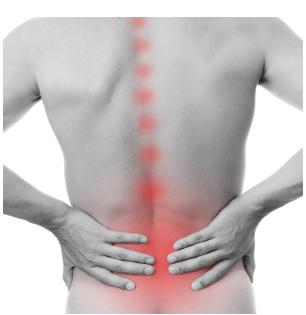
Back Pain Causes and Treatment

Back pain is pain that occurs in the area below the rib to above the femur bones. Back pain perceived may vary, ranging from the does not hurt, but long up to 12 weeks or more (chronic), or extreme pain that comes on suddenly (acute) for a few days or a few weeks and leave you unable to move.


Back pain can be caused by many things, one of them is problem in the muscles such as sprains or dislocation.

  • Muscle sprain and strain
Sprains are the main cause of acute back pain. Overstretch of muscle or tendon can tear the ligaments (connective tissue of the joints). Sprains typically caused by a tendon (the tissue that attach muscles to bones) or torn muscles. Well, it can happen when you rotate the body, lifting with improper body position, or excessive stretching.

  • The shape of the spine
Spinal deformities such as kyphosis or lordosis of the spine, which is a birth defect can also cause recurrent pain in young adult.

  • Trauma
Ligaments, tendons, and muscle lesion can also be caused by an injury when exercising, car accident, or a fall from a certain height.

  • Other causes
In addition to the above causes, back pain can occur by getting infection of the reproductive organs in women, kidney stone, narrowing the distance between the vertebrae, inflammation of the prostate gland, premenstrual syndrome, pregnancy, abortion, miscarriage, prostate cancer, obesity, and osteoporosis.


Most acute back pain can heal itself. While chronic back pain may require medical treatment and surgical procedures. Back pain may be relieved or treated with a variety of this way:

  • Patch
Back pain can be relieved by applying a cream or patch on the pain location. Creams and patches that contain painkiller usually is a free drug. Cream and pain relief patch has advantages when used. Pain relief cream is easy and convenient to use because you just apply it around pain location. The cream also can be removed by washing with water. Other people do not even know if you are using a pain relief cream. This is because the cream does not leave marks or visible to the human eye.

  • Exercise
Exercise, such as swimming and yoga, regularly every day will help reduce your back pain. Select the type of exercise that you enjoy and do not increases the pain.

  • Visit Physician or Therapist
If the pain does not go away for more than six weeks, contact your doctor and seek treatments such as physiotherapy, chiropractic or acupuncture. If the disease is found in the body organ, then immediately seek the appropriate treatment recommended by your doctor.

  • Surgery
Surgery is performed only if other ways have been done but pain still haunt, even make you difficult to sleep and interfere your daily activities.